
Paramount Previous Residents: Era Sources
One address has two trails. The deed trail follows recorded transfers, while directories and censuses show people listed at the place. Paramount's public record path is split between the Assessor, Los Angeles County Registrar-Recorder/County Clerk, Paramount Building, libraries, and historical repositories. The table keeps the years and access limits visible before a search begins. The dates for the city permit files and the full local directory run are not published, so those rows are intentionally marked as open questions.
| Source | Years It Covers | Where Held | What It Shows |
|---|---|---|---|
| RR/CC recorded deeds and index | 1851-present | Norwalk lower level for 1851-1957; second floor for 1958-present | Grantor, grantee, recording date, document number, legal description |
| LA County Assessor Portal | Current parcel and parcel-specific history | Online; owner and mailing identity at the Assessor counter | AIN, situs, building facts, values, events, and document clues |
| Paramount, Hollydale and Compton City Directory | 1956 | Local catalog or staff-assisted library retrieval | Alphabetic names, addresses, and historical household clues |
| Paramount Blue Book, Criss Cross City Directory | 1960, 1964 | Local catalog or staff-assisted library retrieval | Address-to-listed-occupant clues by street and number |
| Federal census | Through 1950 public; 1960 scheduled for 2032 | NARA, library databases, and genealogy services | Household members, relationship, age, and occupation label |
| Paramount permit files | Year depth not published | Building counter or targeted city request | Construction work, applicants, contractors, dates, and inspections |
Start with the current AIN when the question concerns a standing parcel. Start with a directory or census when the question concerns a household in a known year. The RR/CC index is the only path in the table that can carry a title chain back to county records beginning in 1851, but it is not an Internet address index.
The Los Angeles County real-estate records page is the official access point for viewing and ordering instructions. Its capture below belongs with the deed portion of a previous-residents search, not with a claim that the county offers a free remote owner lookup.
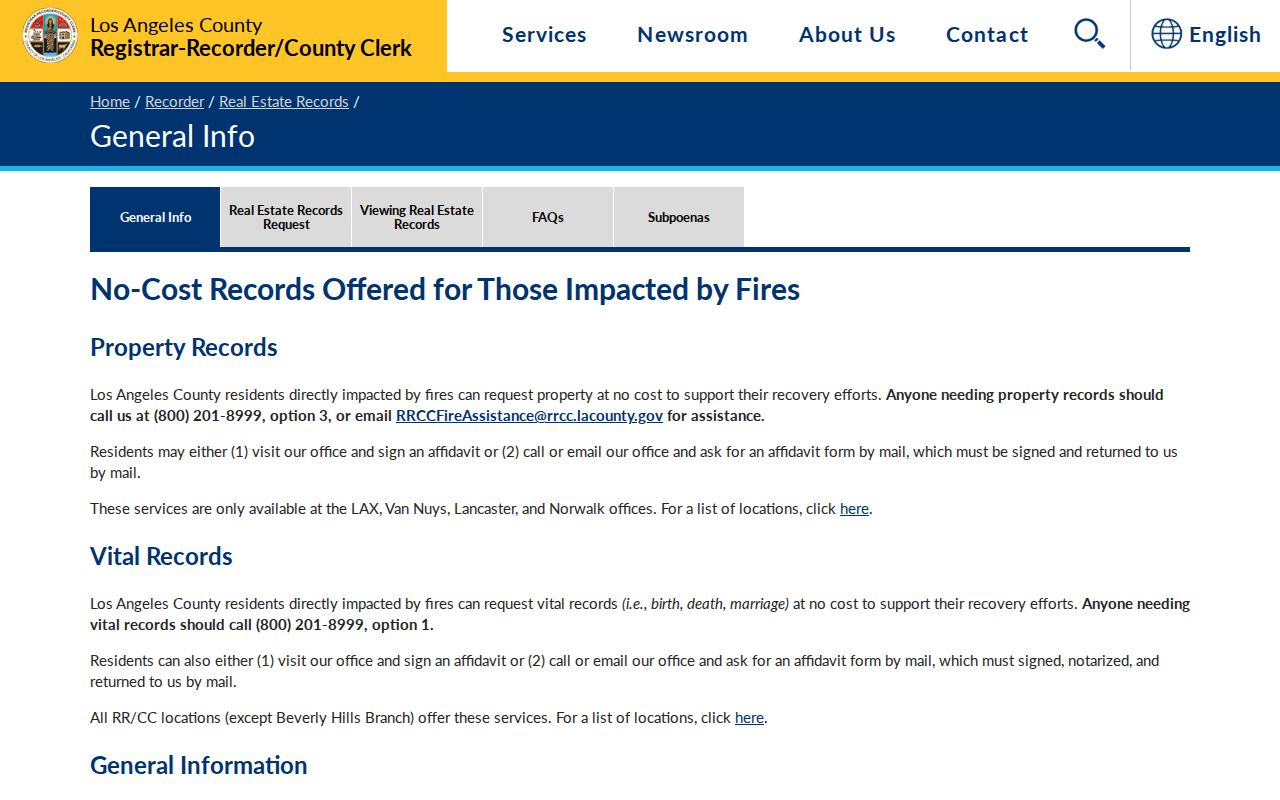
The source page confirms the county route, while the actual name and year work still takes place through the documented Norwalk channels.
Start Paramount Past-Resident Research With an AIN
The Assessor Portal is the first address stop, not a general owner directory. Enter a street address or a 10-digit Assessor Identification Number. A parcel result can show the AIN, situs address, legal-description summary, use and building facts, values, parcel status, and transfer or recording references. Event history may expose a document number that shortens the next RR/CC search.
The online portal omits the owner name and assessment mailing address. Free owner information is obtained at an Assessor district counter, or through Property Data Sales. The situs is the physical parcel. The mailing address is where assessment correspondence goes and may point to a business, trust, manager, or post-office box. Neither field proves who occupied the parcel.
Keep the parcel facts in a small research note before moving to the deed index. The Los Angeles County Assessor Portal can establish the AIN and the current parcel context. It cannot supply a street-wide list of previous residents, and no ZIP-wide resident export is documented.
- AIN
- The 10-digit Assessor Identification Number used to key a parcel in county property systems.
- Situs
- The physical address or location of the parcel, distinct from where tax mail is sent.
- Legal description
- The lot, tract, or other formal land description used to keep the parcel identifiable when names or street labels shift.
- Assessment mailing address
- The destination for assessment correspondence, not proof of occupancy or a list of household members.
Norwalk Deed Records for Paramount Addresses
Los Angeles County has no Internet deed index for a Paramount street address. Norwalk keeps the older 1851-1957 material on the lower level and 1958-present material on the second floor. Free viewing is available by appointment, with appointments made up to two weeks ahead. The alphabetical indexes are arranged by party name and year. Staff do not search by address, and index searches are not done by telephone.
Once the names and year are known, an exact instrument can be ordered online. The stated processing time is within 20 working days. A mail request goes to RR/CC Real Estate Records, P.O. Box 1130, Norwalk, CA 90651-1130. Include the document title, party names, and year or years searched. Entire instruments must be purchased, so a request should identify the likely deed before money is sent.
For previous residents research, the plain copy fee is $5 for the first page and $3 for each additional page. A certified copy is $6 plus $3 for each additional page. A name and year search is $0.50 with a $1 minimum. Credit-card handling is $1.75, and UPS return service is $18.50. Verify the current schedule with RR/CC before ordering because fees and procedures can change.
Trace Paramount Previous Residents Through Deeds
A deed chain is a backward name trail, not a direct occupancy list. The current assessed owner supplies the first name to test. The recorded instrument supplies the next grantor, legal description, and date. Repeat the same move until the index or the land description no longer supports a safe match. Search each name with the year, because the RR/CC index is not keyed to a modern street address.
- Search the Paramount address in the Assessor Portal and copy the AIN, situs, legal-description summary, parcel events, and any document reference.
- Obtain the assessed owner and mailing destination through the Assessor counter or Property Data Sales, then record the source and date of that identity.
- Use the owner's name and likely acquisition year in the Norwalk alphabetical grantor-grantee index.
- Read the deed image or ordered copy for the grantor, grantee, recording date, document number, and legal description.
- Search the grantor as an earlier grantee, using the lot, tract, and legal description to separate same-name parties.
- Stop or change sources when an address, parcel, or party no longer matches. A directory, census, permit, obituary, or probate record may fill the next gap.
- Grantor
- The party conveying an interest in the recorded instrument, often the seller in a deed.
- Grantee
- The party receiving that interest, often the buyer in a deed.
- Chain of title
- The linked sequence of recorded transfers that connects one holder to an earlier holder.
- Legal description
- The formal land wording that can remain useful when a street name, number, or AIN changes.
A deed proves a conveyance. A deed of trust proves a financing security interest, not a sale by itself. A recorded return address also does not prove that the person lived at the Paramount parcel.
Paramount Street Names Across Earlier Records
Street-name history is a local trap in any search for who lived here before. Paramount Boulevard was Ocean Avenue until 1931. Center Street and later Olive became Alondra Boulevard. Clearwater and Hynes describe the communities before the 1948 Paramount name. One research example is 7521 Compton Boulevard, later known as 7521 Somerset Boulevard. A modern address search can miss an older record when it uses only the present label.
Use the lot, tract, legal description, and parcel-change history as the continuity bridge. Keep the old and new names side by side in each note. The change from Clearwater and Hynes to Paramount also affects directories, newspapers, census place labels, and deeds. Search the former community names before assuming that a blank result means the household or parcel was absent.
| Ocean Avenue | Earlier name for Paramount Boulevard before the 1931 rename. |
|---|---|
| Center Street and Olive | Earlier labels connected to present Alondra Boulevard. |
| Clearwater and Hynes | Earlier communities to search before they combined under Paramount in 1948. |
| 7521 Compton Boulevard | Historical address later known as 7521 Somerset Boulevard. |
Paramount Directory Bridge to Past Residents
The directory layer sits between deeds and census schedules. The 1956 TLM alphabetic volume, Paramount, Hollydale and Compton City Directory, moves from a name to an address. The 1960 and 1964 Luskey Blue Books use the criss-cross approach, moving from street and number toward a listed occupant. Exact titles are verified, but the complete shelf run and call numbers are not published.
Record the printed street label, number, name, spouse note, occupation label, and any householder or owner mark. Then compare the same address in the next available year. The local collection details and entry conventions are covered in the Paramount Directory Book. The address-history workflow uses those volumes as dated evidence rather than repeating their full shelf description.
A reverse entry does not establish that every person in a household was listed. A missing name may mean a move, death, nonresponse, a different adult listed, or a publication boundary. Use the entry to choose the next check, not to declare a final result.
Paramount Previous Residents and Census Years
The federal census adds household detail that a deed cannot. Public schedules are available through 1950 under the 72-year rule, and 1960 is scheduled for 2032. A census search should use the place name and boundary of its own year. Clearwater, Hynes, and Paramount can all matter, especially when the address predates incorporation on January 30, 1957.
- Set the target year and write down the street name used in that year.
- Check the 1930, 1940, or 1950 schedule under Paramount, Clearwater, and Hynes as the local history requires.
- Compare the household surname, ages, relationships, occupation label, and address or enumeration district.
- Pair the result with the nearest directory year, especially 1956, 1960, or 1964, without treating a gap as proof of a move.
- Use a deed, permit, newspaper, obituary, or probate record to test the next change in the household trail.
The census and directory answer different questions. One records the household at an enumeration point. The other reflects a publisher's collection and arrangement. Together they can show why a deed-only search misses the people who were recorded at a place but did not hold title.
Paramount Permits and Vital Records
Paramount Building and Safety keeps permit files at the city counter. The city Building and Safety page describes counter and file-review access. The files can date additions, demolitions, reroofing, electrical or plumbing work, inspections, and the names of applicants or contractors. The online iWorQ permit-status route requires a known permit number and access code, so it is evidence for a known project rather than a broad address index. The city can also receive a precise records request for an identifiable file.
Vital records can close a household trail, but access depends on the record type and the requester's authority. Los Angeles County RR/CC handles county events, while California's statewide program handles statewide copies and verification products. The LA County birth-record page is the official route for a birth record request.
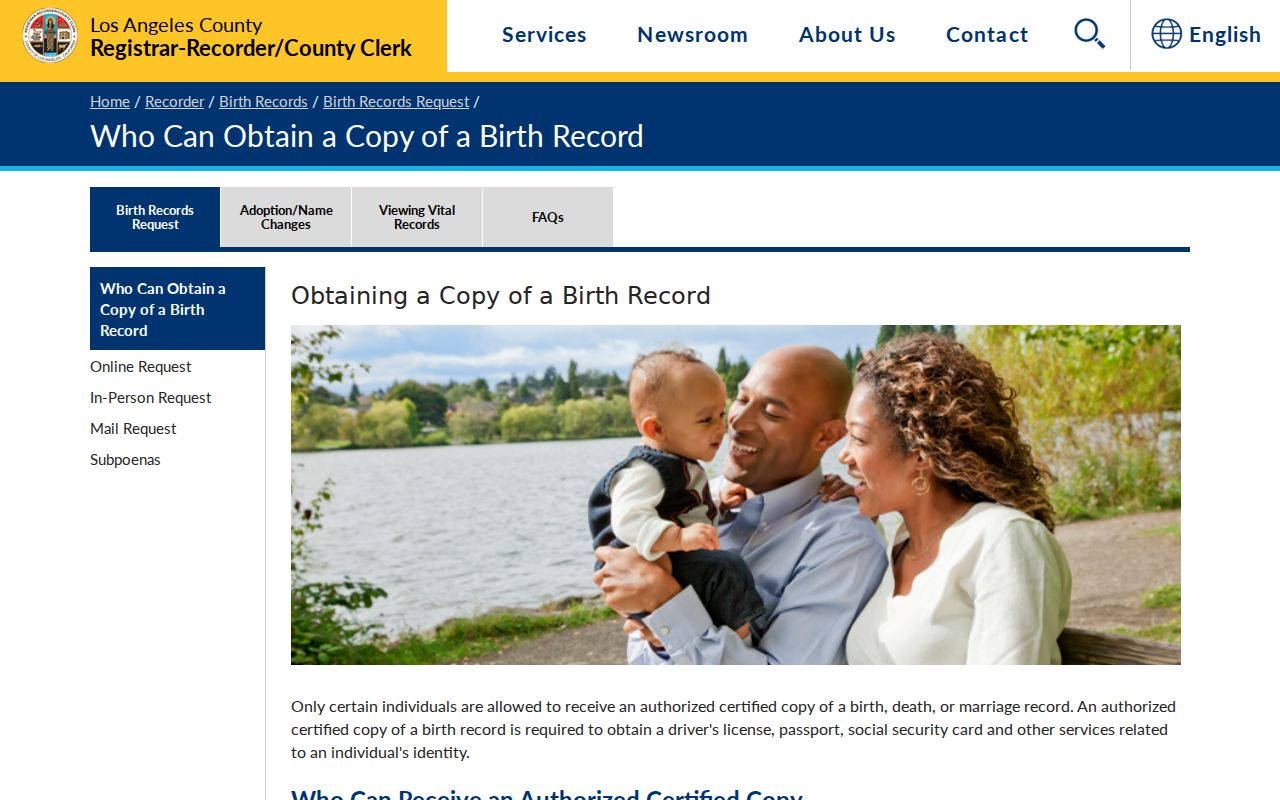
A birth record can support a family connection when the requester meets the applicable access rule, but it does not by itself prove that a person occupied the searched address.
Marriage records may connect two names or explain a surname change. The LA County marriage-record page sets the official county route and distinguishes public and confidential marriage access.
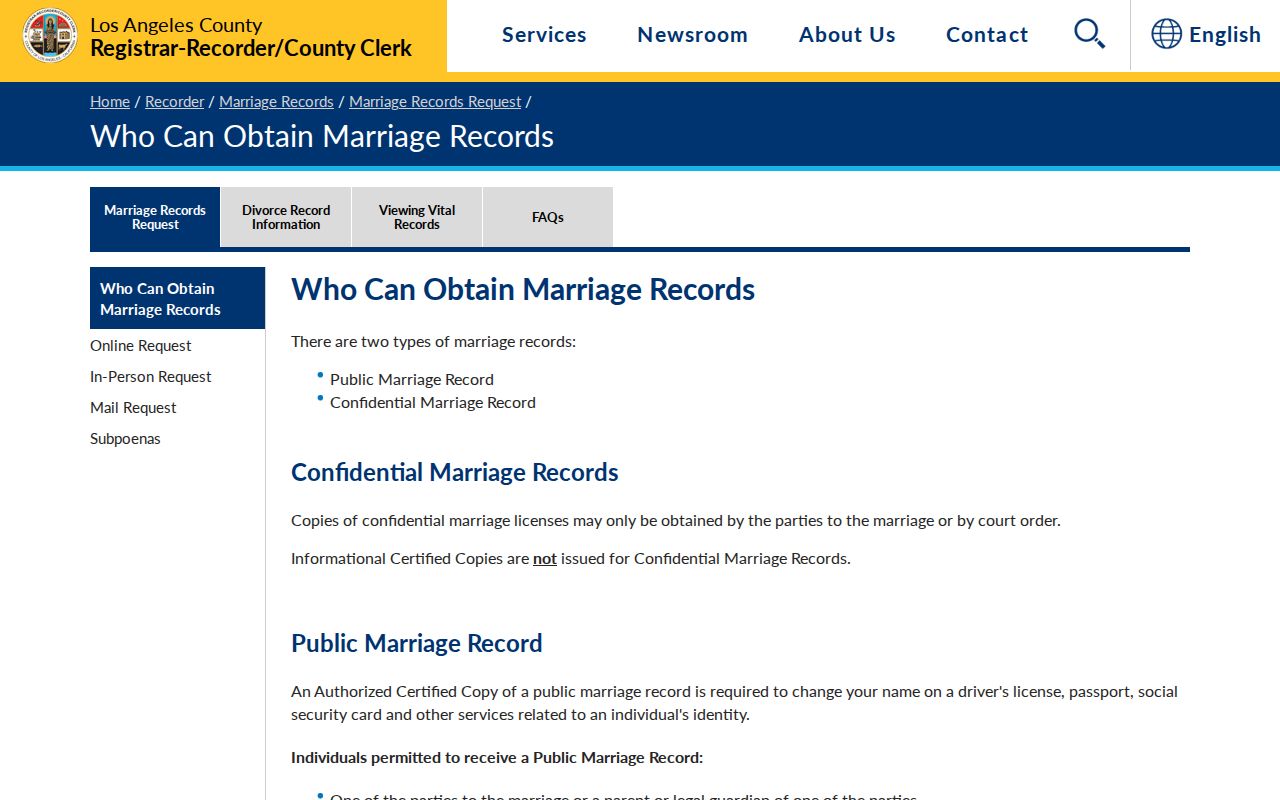
Use a marriage record as one corroborating link, then return to the address, directory, census, or deed source that anchors the person in place.
Death records, obituaries, and probate files can provide an endpoint for past residents. The LA County death-record page gives the county request path. Probate papers are especially useful for testing an heir clue; an obituary or index alone should not be treated as proof.
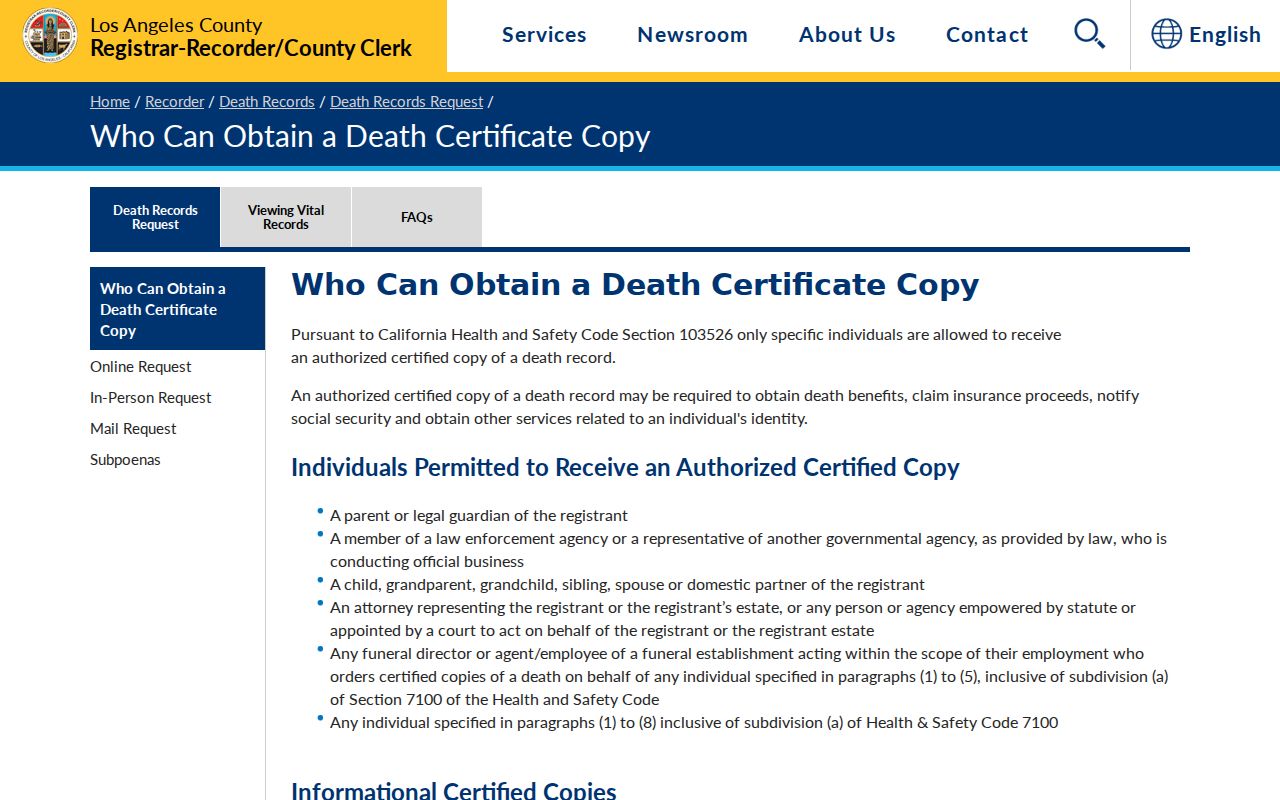
The death-record source can confirm an event when the requester is eligible, while probate and cemetery material can supply the next place or family name to check.
Paramount House History in Local Archives
Paramount Historical Society preserves photographs and local stories and can be reached at (714) 553-6747 or paramounthistoricalsociety@gmail.com. No current reading-room schedule was located, so contact is needed before planning an in-person visit. CSUDH South Bay and Gerth Archives add regional photographs, letters, maps, and documents involving Paramount, Compton, Lynwood, and Long Beach.
The city's 2025-26 Historic Context Statement is a current finding aid. The 2025 statement covered early inhabitants through 1980, and the March 2026 update extended the narrative through 1999 with interviews and added ethnic-diversity and development analysis. Its archive, permit, map, and directory references help explain a change that a deed chain only records as a date and name. Sanborn fire-insurance maps are another possible visual bridge, but no Paramount-specific sheet and year were verified. The Library of Congress Sanborn collection can be searched under Paramount, Clearwater, Hynes, Compton, and Long Beach. The Paramount Historic Context Statement is the best starting point for the local source map.
These repositories can explain why a parcel changed shape, why a street label shifted, or why a family name appears in a local story. They should be cited as historical context and paired with the official record that answers the specific identity or title question.
Lawful Research With Paramount Previous Residents
Previous residents research works best for family history, a documented house history, estate and heir questions, and personal civic curiosity. Public access is not a license to publish private details, follow a living person, or turn a partial record into a claim about someone. Use the least identifying detail needed for the research question, and verify a result with the office or collection that holds the record.
Lawful use. California law prohibits stalking, harassment, threats, and harmful distribution of identifying information. Keep Paramount address research tied to a lawful personal purpose, do not use it to track or intimidate anyone, and stop when the record does not support a safe match.
The most reliable chain is visible in plain terms: address to AIN, AIN to assessed owner, owner and year to RR/CC, deed to earlier grantor, then directories, census, permits, and vital records for the people and events connected to the place. Each step has a different keeper and a different limit. That is why a careful search can be both useful and restrained.