
Paramount Neighbors by Block
A block-level search is a layered parcel exercise. The Los Angeles County Assessor shows the geometry and facts tied to each parcel, but its public site does not place owner identity or a household roster beside every lot. The Assessor counter is a separate access route. Deeds identify parties to a recorded transaction, city files describe municipal activity, and civic groups offer voluntary ways to meet people. None of those sources is a complete list of current Paramount neighbors.
| Source | What It Shows About a Block | Access |
|---|---|---|
| Assessor map and parcel cards | Lot geometry, AIN, situs, building, value, and event facts | Free online map and cards; owner identity is not displayed online |
| Assessor counter | Assessed owner and assessment mailing destination | In person; not an anonymous neighbor browser |
| Recorder deed trail | Grantor, grantee, date, document number, and legal description | RR/CC Norwalk manual name/year index or ordered copy |
| Paramount permits and planning | Address-based improvement, application, inspection, and zoning context | Online instructions plus counter or focused request |
| Voter records | One voter’s status and registration facts when access is authorized | Authenticated self-check or controlled county request |
| Neighborhood Watch and service clubs | Meeting or organization contact routes, not member rosters | City-published contact pathways |
| 1960 and 1964 criss-cross books | Past occupants listed by street and house number | Library or historical collection access |
Owners and occupants are different categories. A mailing address can belong to a trust, manager, business, or nonoccupant owner, and a permit applicant may not live at the parcel. Household members, utility customers, delivery records, and protected people remain outside a public block lookup. Treat the table as a route map for lawful research, not as proof that every person nearby has been identified.
Adjacent Parcels for Paramount Neighbors
The safest block method starts from a known address and walks outward through parcel identifiers. The Assessor Portal accepts a street address or a 10-digit AIN. Open the parcel map, note the surrounding polygons, and inspect each neighboring card one at a time. AIN means Assessor Identification Number, the parcel key that keeps the map, card, and event history together.
- Search the target address in the Assessor Portal and save the AIN, situs, legal description, and parcel-map link.
- Click or transcribe the surrounding polygon AINs, then open the nearby parcel cards rather than guessing from a street number.
- Record only the fields that answer the question: parcel status, building facts, event history, and any document number that may shorten a deed search.
- For assessed owner or mailing information, use the Assessor’s in-person route. For a full named-street chain, use the Paramount Street Directory address workflow.
GIS-NET Public adds identify, query, buffer, select, measure, export, report, and print tools. It is designed around unincorporated territory, however, and county zoning layers mask incorporated Paramount. Use it for boundary or nearby unincorporated context, then rely on the Assessor Map Search for incorporated parcels and Paramount Planning for city zoning.
Paramount Neighbor Geography and GIS-NET
Paramount’s city line changes what a map layer can safely say. GIS-NET can help identify a parcel, draw a buffer, or compare a nearby county planning layer, but the county warns that its planning focus is unincorporated territory. An incorporated Paramount parcel should not inherit a county zoning label simply because it appears on the same screen. Municipal land-use questions belong with Paramount Planning.
That geography matters for neighbors because a buffer can cross a city edge, an industrial boundary, or an older tract line. Keep the AIN and legal description with every saved map note. The map shows where lots sit; it does not turn a polygon into an occupant list. A block can be mapped accurately while the people connected to it remain unknown or protected.
Note: GIS-NET is useful for spatial context, but incorporated Paramount zoning must be checked with the city rather than inferred from a county layer.
Paramount Neighbor Parcel Inventory
A small parcel inventory helps keep facts from being mixed across adjacent lots. The public Assessor card can contain more than a map point, including parcel status, building details, values, legal description, and event history. It omits owner and assessment mailing fields online. Copy the field label as shown, and keep each AIN on its own line.
| AIN and situs | Parcel key and physical address used to anchor the map |
|---|---|
| Legal description | Lot, tract, or other land description that can bridge changed addresses |
| Parcel status | Create or delete dates, status labels, and parcel-change history |
| Building facts | Use, design, quality, units, bedrooms, baths, area, and year-built fields when present |
| Land and value | Land area, dimensions, influence flags, assessed values, and reason codes |
| Recorded event clues | Recording date, document number, document type, reason, and parcel-change links |
| Owner and mailing | Excluded from the public Internet card; use the lawful Assessor counter route |
The assessment mailing address is correspondence destination, not proof that an owner lives at the situs. A deed adds a transaction role, while a permit adds an applicant or contractor trail. Keep those limits visible in the inventory so a block map does not become an unsupported list of Paramount neighbors.
Note: An AIN follows the parcel, while a mailing address and an occupant may change without changing the map polygon.
Paramount Neighbor Permits by Address
City permit records add building history to the parcel layer. Paramount’s iWorQ permit-status route is keyed to a permit number and access code, not a general public address index. The Building counter can assist with file review, copies, inspections, applications, and related records. For an identifiable municipal file that is not posted, use the city’s Public Records Request Center. Permit history can show an alteration or inspection, but it does not prove who occupies the parcel.
The official Paramount permit-status resources explain the city’s iWorQ route and permit-file copy guidance.
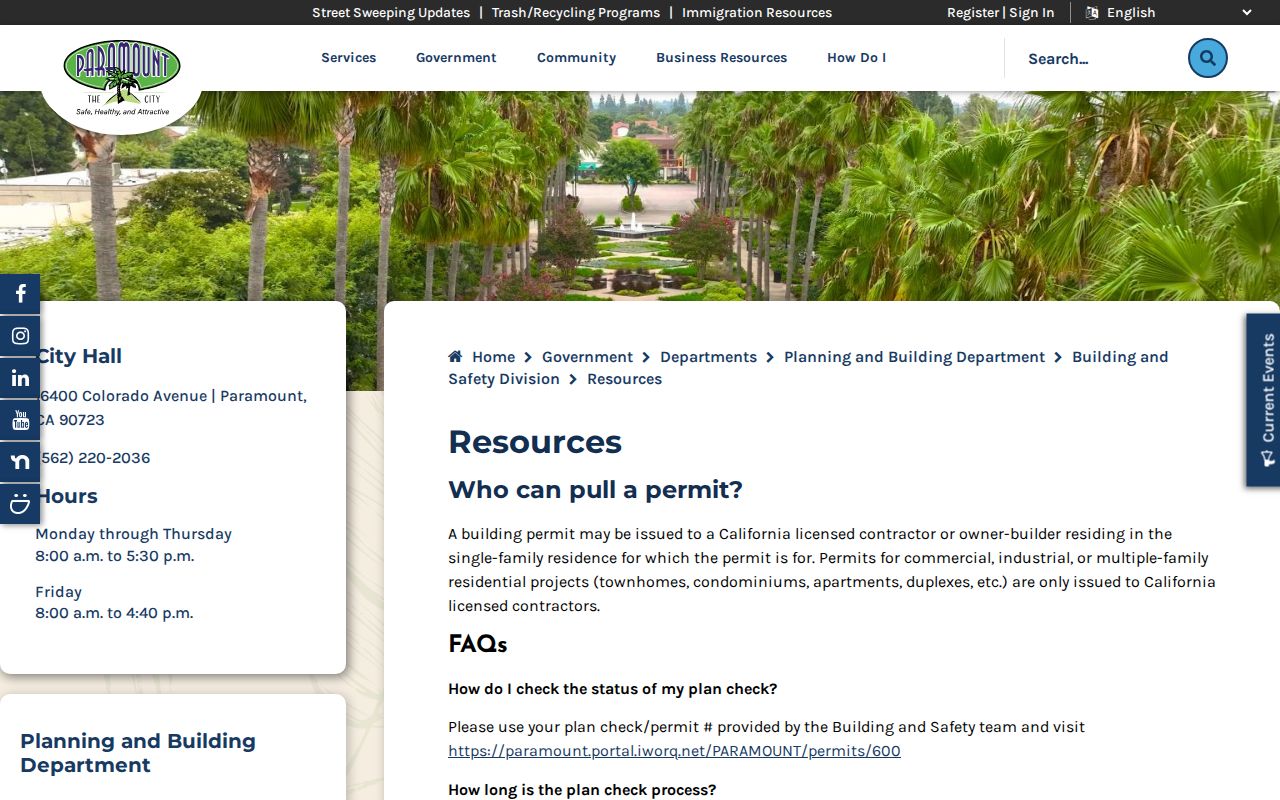
The permit resource is a project-keyed doorway, so an address search may still require a staff request or a known identifier.
The separate Paramount planning permits and applications page supplies municipal application types and submission information.
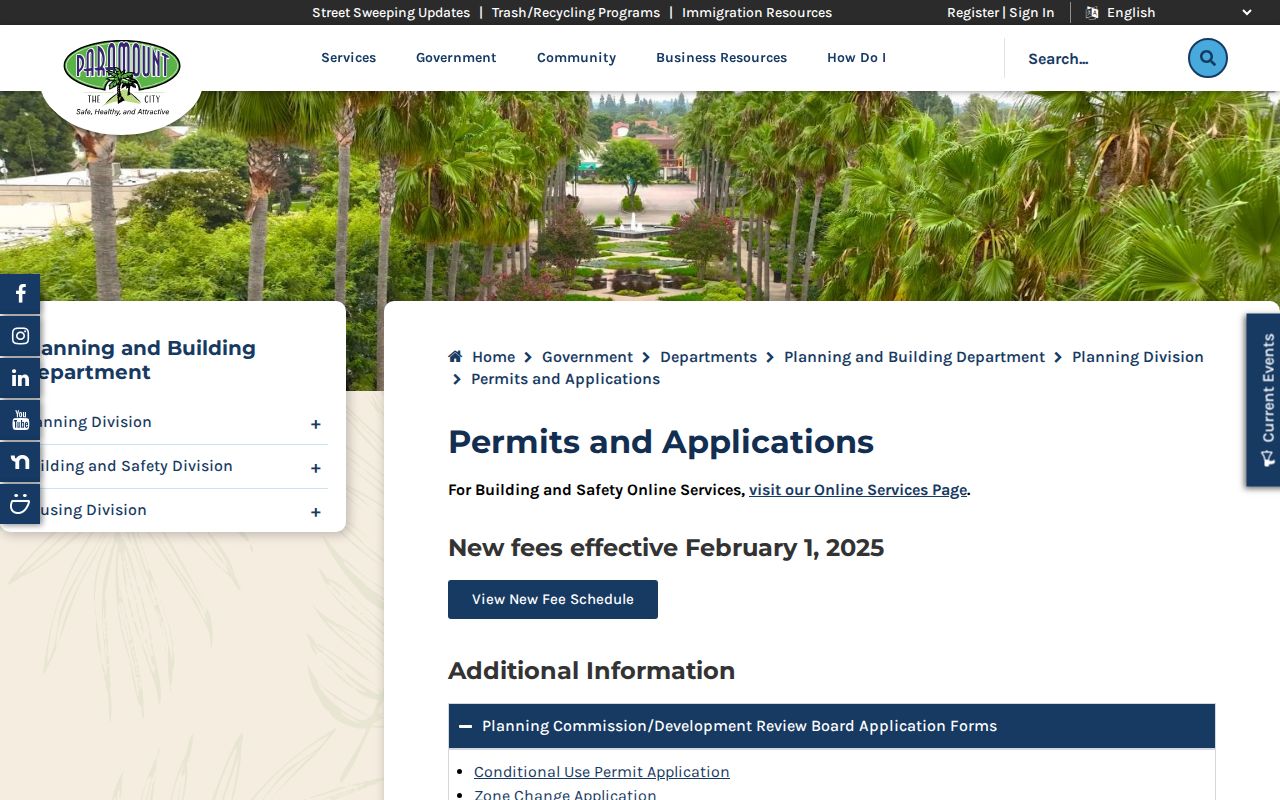
Planning records explain the city review path around a parcel, not the private identity of every nearby household.
City Clerk Records for Paramount Blocks
The City Clerk holds a civic layer that can explain why a block changed without naming every resident. Municipal minutes, ordinances, contracts, agendas, appointments, campaign disclosures, and Form 700 filings are among the record types identified by the city. The Paramount Public Records Request Center has operated as the local CPRA route since June 1, 2023. A request works best when it names a record, date range, department, address, or project rather than asking for a broad list of neighbors.
The official Paramount City Clerk records page shows the municipal source behind agendas, elections, appointments, and public information.
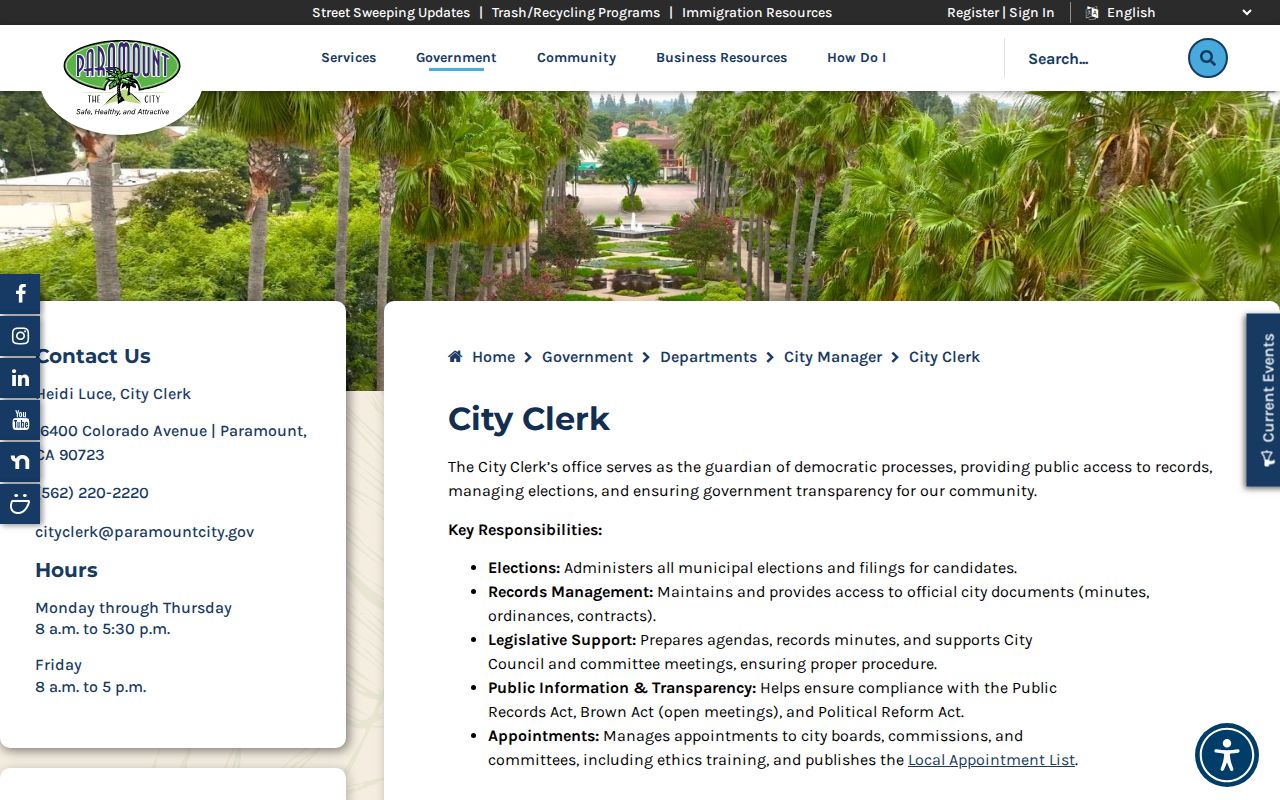
Clerk records can connect a parcel or civic issue to a public action, but they do not create a membership roster for the block.
Note: A focused request names the record and date range, which helps staff separate releasable material from protected details.
Paramount Neighbor Code Cases
Code enforcement supplies another address-based context. The city’s jurisdiction and reportable categories can help explain a visible property issue, while active files, complainant details, and protected information may be confidential, exempt, or redacted. A focused request should identify the address and the kind of final or releasable record sought. A code case is not a finding about the people in a building, and a complaint is not proof of a violation.
The official Paramount Code Enforcement page sets out the city channel for reportable property and neighborhood concerns.
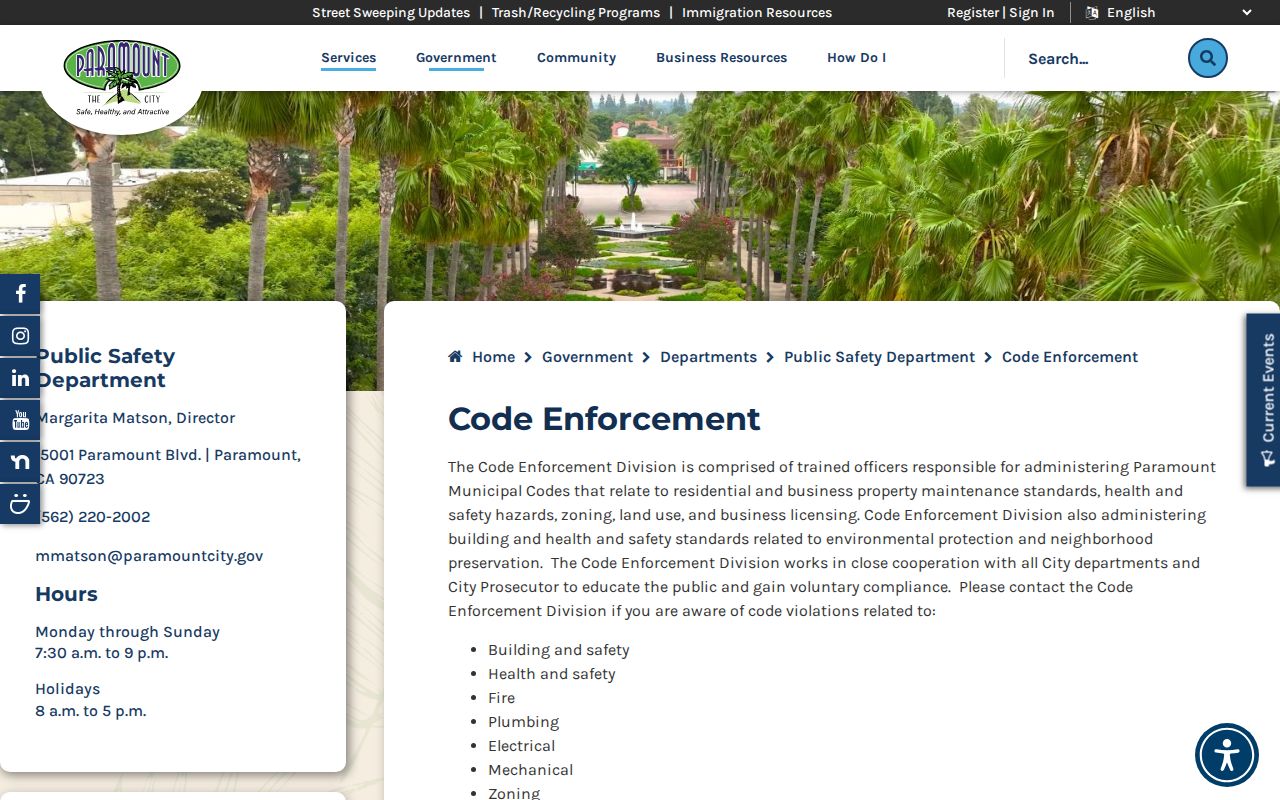
Reading the city rule and the access limit together prevents a public-address search from turning an allegation into a personal profile.
Voter Rules for Paramount Neighbors
California offers no anonymous voter block browser. Los Angeles County’s My Voter Status tool asks the voter for a name, date of birth, and identifying registration credentials, then returns that person’s status, registered address, districts, and election information. It is an authenticated self-check. A county name search or certified copy follows a controlled request path and cannot be used to browse every address on a Paramount street.
Elections Code sections 2187 and 2194 limit registration information to election, scholarly, journalistic, political, or governmental purposes. Section 18109 makes knowing unauthorized acquisition or use a misdemeanor. Driver signature, Social Security, and DMV license or identification data are not released. Safe at Home participants have added address shielding. Voter participation history, when lawfully available, shows whether someone participated, not how they voted.
The practical neighbor question is therefore narrower: confirm your own registration, use an authorized county route for a permitted purpose, or choose a voluntary civic contact. A voter result should never be treated as a public list of the people around a parcel.
Paramount Neighbors and Civic Contacts
Voluntary organizations are the most direct way to meet Paramount neighbors without treating a records search as a social roster. Neighborhood Watch is citywide. Residents choose a meeting date, generally between 5:30 and 7:30 Monday through Thursday, then contact Community Preservation Manager Steven Coumparoules at 15001 Paramount Boulevard or (562) 220-2002. The route provides a meeting pathway, not a list of watch participants.
Neighborhood Watch
Citywide organizing route. Contact Community Preservation Manager Steven Coumparoules, 15001 Paramount Boulevard, (562) 220-2002.
Service Clubs and Groups
The city list names Elks Lodge #1804, Lions, Rotary, Women’s Club, Paramount Tepic Sister City, Latina Arts Foundation, Mujeres Unidas Sirviendo Activamente, and Unity in the Community.
Historical Society
Paramount Historical Society preserves objects, publications, and stories. The researched contact is (714) 553-6747 or paramounthistoricalsociety@gmail.com.
Published contacts are organizational contacts, not member directories. Service clubs, the Historical Society, and a watch meeting can help with local context or a voluntary introduction while leaving private household details alone.
Privacy Limits for Paramount Neighbors
Public parcel and city records have a narrow purpose. A deed does not show every occupant, a permit does not identify a household, a voter rule does not open a block, and a civic contact does not disclose its members. California privacy rights can help a person ask a covered business to know, correct, delete subject to exceptions, or stop sale and sharing of personal data. They do not erase official records that a lawful custodian must keep.
| Official parcel, deed, and city records | Strong primary-source context, but access is split across county and city offices; owner, occupant, and complainant are different roles. |
|---|---|
| Commercial neighbor tools | May combine stale public and commercial data or merge similar names; treat the category as a lead only, never as a verified block record. |
Safe at Home can supply a substitute address and mail forwarding for eligible survivors of domestic violence, stalking, sexual assault, child abduction, elder or dependent-adult abuse, trafficking, and specified threats. Penal Code sections 646.9 and 653.2 address stalking and harmful electronic distribution of identifying information. Public availability never authorizes doxxing, impersonation, repeated unwanted contact, or intimidation.
Lawful use. Paramount neighbor research is for block awareness, family history, voluntary reconnection, and civic curiosity. Stop at protected or private information, verify with the custodian, and never use a lookup to stalk, harass, threaten, or harm a person.